We take a look at the pros and cons of the Komnenian system. Then trace why it was causing enough resentment to lead to provincial separatism.
We then move on to discuss the army and the bureaucracy and the people of Constantinople. Looking at how each was affecting political stability in the run up to the Fourth Crusade.
Pic: The remains of the Church of St John at Philadelphia (modern Alaşehir). Philadelphia was one of the centres which broke away from Constantinople to go it alone.
Nathan Websdale is a PHD candidate at Oxford University and President of the Oxford University Byzantine Society.
His work is focussed on ethnic identification, social inclusion and self-determination in the Byzantine World, c.1200-c.1230.
Nathan graduated with a BA (First Class) in History from Royal Holloway, University of London in 2016 and an MA (Merit) in Late Antique and Byzantine Studies from the Intercollegiate University of London in 2017.
I talk to Nathan about the thorny issue of provincial separatism before and after the Fourth Crusade.
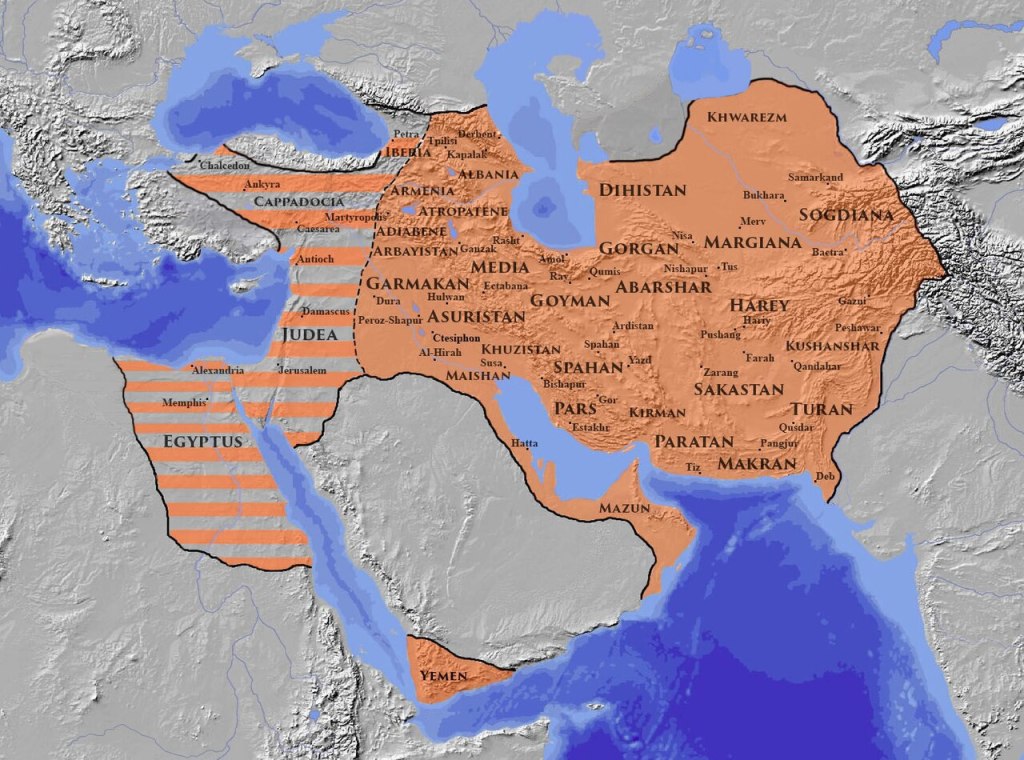
Picture: A map showing the areas which were not under Byzantine control before the sack of Constantinople in 1204. The shaded areas were being held by provincial rebels or foreign powers. From the article ‘La decomposition de l‘empire byzantin’ by Nicolas Oikonomides (from the book Byzantium from the Ninth Century to the Fourth Crusade)
More questions to tackle this week. Comparing the sack of 1204 to the sack of Rome in 410. Questioning the Byzantine system of succession and the routes of their decline. And pondering whether other Emperors rose to power like Alexios Angelos – on the back of a foreign army.
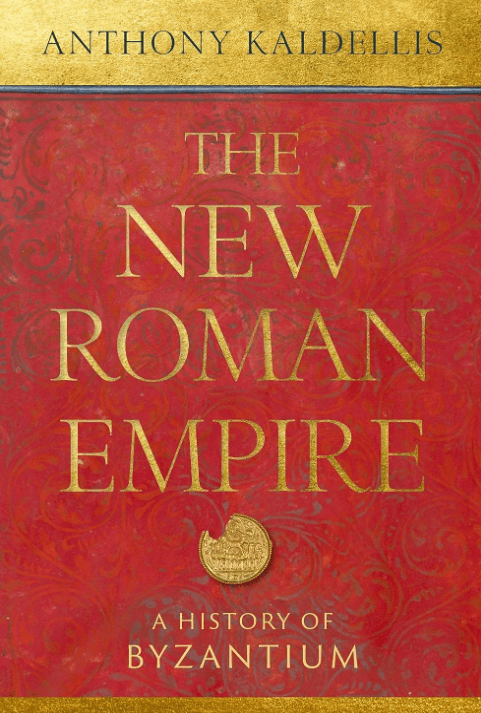
Professor Anthony Kaldellis has just completed a new history of Byzantium which will be published in October 2023. So I cheekily asked him if he would list his 10 greatest Emperors. Graciously he agreed to apply his immense knowledge to this frivolous topic.
I answer more questions about the Fourth Crusade and the sack of Constantinople. What was the reaction of other nations? Did people see it as sign of the end times? What did the Byzantines think of the Templars and Hospitallers? What were the religious differences between the Orthodox and the Catholics?
Pic: A member of the Knights Templar in the popular imagination
I answer more questions about the Fourth Crusade and the sack of Constantinople. We talk about why the Roman response was so feeble and if anything else could have been done? Along with questions about the tombs of the Emperors, statues, coins and ships.
Pic: Baldwin of Flanders enters Constantinople by Eugène Delacroix (1840)
This is a special episode to urge listeners to donate to the ongoing relief effort in Turkey and Syria. I interview two expert guests about the situation with a particular focus on the city of Antakya (Byzantine Antioch).
Andrea De Giorgi is a Professor of Classical Studies at Florida State University. He specializes in Roman urbanism and visual culture and has written many books and articles on the subject. He co-authored the fantastic book Antioch. A History which I thoroughly recommend. Dr. De Giorgi has also directed excavations and surveys in Turkey, Syria, Georgia, Jordan, and the UAE. Since 2013, he has codirected the Cosa Excavations in Italy and, since 2021, the Coastal Caesarea Archeological Project in Israel; currently, he is studying the 1930s Antioch and Daphne collections at the Princeton University Art Museum.
Katherine Pangonis is a historian and author of the book ‘Queens of Jerusalem’ who I interviewed back in episode 238 of the podcast. Her second book – to be published this summer – is called ‘Twilight Cities: Lost Capitals of the Mediterranean.’ In it she explores famous cities from antiquity like Tyre, Carthage and Ravenna. Cities who once ruled whole Empires and were littered with magnificent buildings but have been somewhat forgotten. One of the cities she covers is Antioch. She also hosts the podcast – Women Who Dared to Write.
This is an appeal for you to donate to one of the various charities who are rushing to the scene at this moment to help the survivors. You have a number of options. You may have campaigns being run in your country by reputable organisations. So here in the UK the Disaster Emergency Committee have launched an appeal that has raised millions. This is an organisation which brings a group of charities together. In this case Oxfam, Save the Children, Tearfund and Islamic Relief amongst many others.
The White Helmets are volunteers who have been operating in Syria for many years. They help evacuate people from dangerous areas and offer medical help.
AKUT Search and Rescue Association. They are a non-governmental organisation offering emergency and disaster relief to people caught up in natural disasters in Turkey.
AHBAP an independent civilian organisation who offer disaster relief to communities in need across Turkey. This is the organisation that the kind listener who prompted me to make this appeal recommends.
I’m sure you’ve heard about the horrific earthquake which struck Turkey on the 6th February. As I’m recording this over 25,000 people have been confirmed dead. Many, many more will be reported so in the coming weeks. Tens of thousands have been injured. And the UN is now saying that at least 870,000 people need food urgently. While millions of people across Turkey and Syria have been made homeless.
This is an appeal for you to donate to one of the various charities who are rushing to the scene at this moment to help the survivors. You have a number of options. You may have campaigns being run in your country by reputable organisations. So here in the UK the Disaster Emergency Committee have launched an appeal that has raised millions. This is an organisation which brings a group of charities together. In this case Oxfam, Save the Children, Tearfund and Islamic Relief amongst many others.
The White Helmets are volunteers who have been operating in Syria for many years. They help evacuate people from dangerous areas and offer medical help.
AKUT Search and Rescue Association. They are a non-governmental organisation offering emergency and disaster relief to people caught up in natural disasters in Turkey.
AHBAP an independent civilian organisation who offer disaster relief to communities in need across Turkey. This is the organisation that the kind listener who prompted me to make this appeal recommends.
St Mark’s Square – an imitation of a Byzantine forum. St Mark’s Basilica is prominent with the bronze horses taken from the Hippodrome.
The ‘Pillars of Acre’ (from the Church of St Polyeuktos) and the Porphyry statue of the Tetrachs. Both sit outside St Mark’s Basilica in Venice and both were taken from Constantinople.
We discuss what happened once the Latins started looting. How were the Byzantines treated? What was taken and what has survived?
Period: 1204
Pic: The Colossus of Barletta. Most likely this is the Emperor Leo I (457-74 AD)