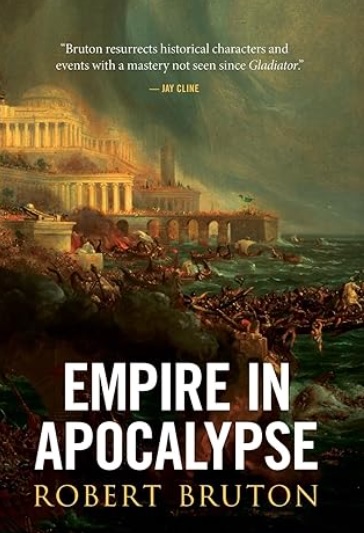
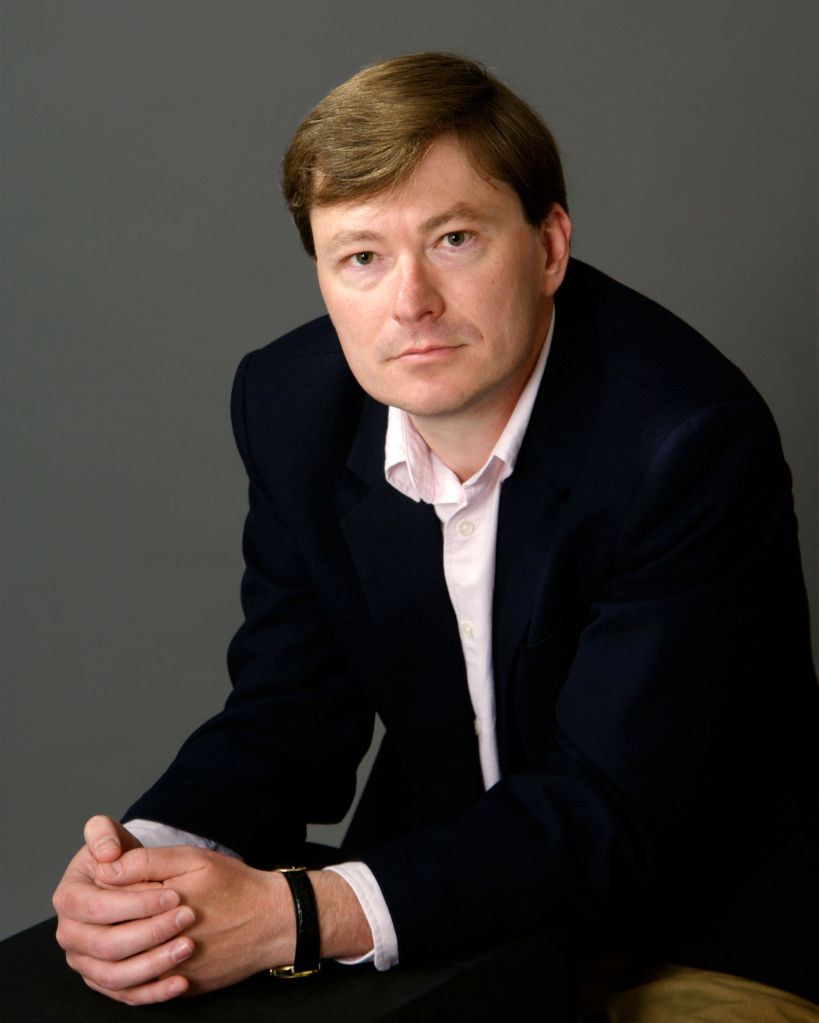
American author Robert Bruton takes us through his Master’s thesis on the role of climate change and plague in the decline of Roman fortunes in the 6th century.
He is also writing a trilogy of historical fiction novels about the life of Belisarius.
I talk to historian Adrian Goldsworthy about his new book. It covers the 700 year rivalry between the two great powers of the ancient world. Everything from Crassus having gold poured down his throat to Heraclius returning the True Cross to Jerusalem.
Dr Goldsworthy is an award winning historian of the classical world. He has written a dozen books on Greco-Roman topics including biographies of Julius Caesar and Augustus. As well as studies of the Roman army and the Empire’s rise and fall. So if you like what you hear today there is a small library of Goldsworthy goodness waiting for you to read.
In response to a listener question I decided to produce a whole episode talking about points of comparison between Byzantium and ‘Game of Thrones.’
To listen to this episode support the podcast at the highest level on Patreon. You will get access to over 30 bonus episodes of the show and won’t have to listen to any adverts.
I talk to Katherine Pangonis about her new book – Twilight Cities: Lost Capitals of the Mediterranean. In it she travels to Tyre, Carthage, Syracuse, Ravenna and Antioch to tell their stories and experience what remains.
It’s a fantastic book for those who want to learn more about these ancient power centres and be inspired to visit them.
We spoke to Katherine about her first book ‘Queens of Jerusalem’ back in episode 238. She returned to tell us about the devastating earthquakes in Turkey in February 2023. Find out more about her at her website.
We look at the stories of three different Romans who had to deal with their city being sacked. Through their experiences we come to a better understanding of the loss felt by those who lived through the fall of Constantinople in 1204. NOT SUITABLE FOR YOUNG EARS.
Our final batch of questions for this century includes queries about the Hippodrome, diplomatic marriages, national identity and political legitimacy. We also enjoy an update on the Crimea, the Jewish communities of Byzantium and the Varangian Guard. I also talk about the perception of time and rank some dynasties.
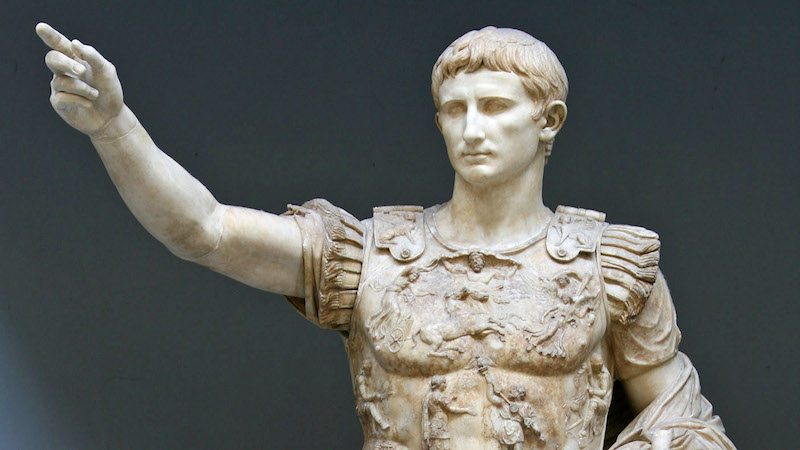
Pic: Augustus. Does his dynasty compare favourably to the Komnenoi?
We take a look at the pros and cons of the Komnenian system. Then trace why it was causing enough resentment to lead to provincial separatism.
We then move on to discuss the army and the bureaucracy and the people of Constantinople. Looking at how each was affecting political stability in the run up to the Fourth Crusade.
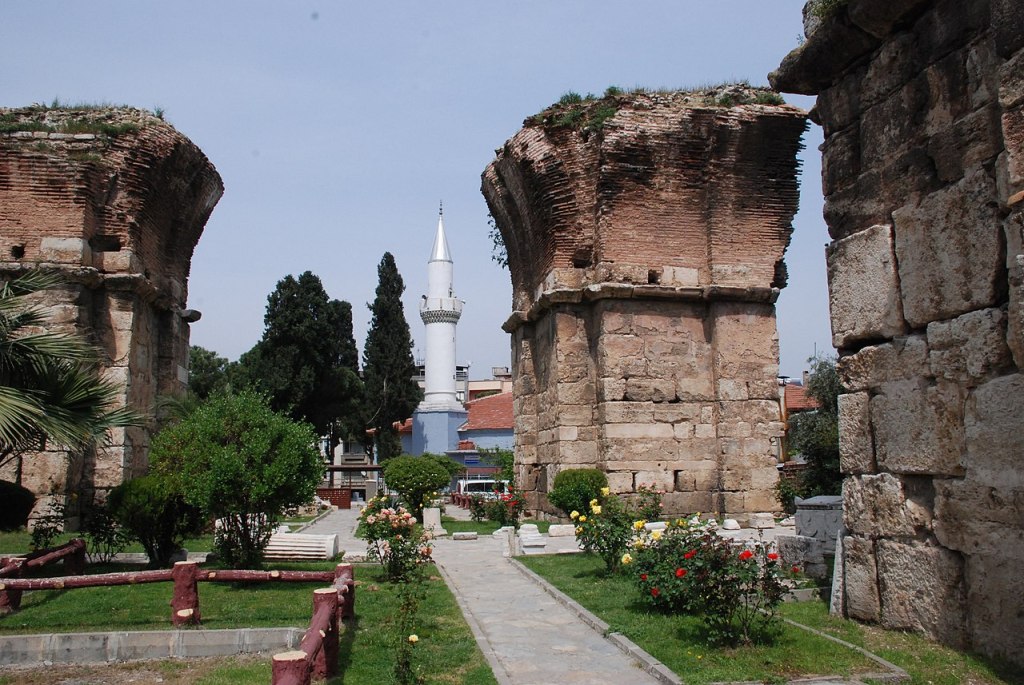
Pic: The remains of the Church of St John at Philadelphia (modern Alaşehir). Philadelphia was one of the centres which broke away from Constantinople to go it alone.
Nathan Websdale is a PHD candidate at Oxford University and President of the Oxford University Byzantine Society.
His work is focussed on ethnic identification, social inclusion and self-determination in the Byzantine World, c.1200-c.1230.
Nathan graduated with a BA (First Class) in History from Royal Holloway, University of London in 2016 and an MA (Merit) in Late Antique and Byzantine Studies from the Intercollegiate University of London in 2017.
I talk to Nathan about the thorny issue of provincial separatism before and after the Fourth Crusade.
Picture: A map showing the areas which were not under Byzantine control before the sack of Constantinople in 1204. The shaded areas were being held by provincial rebels or foreign powers. From the article ‘La decomposition de l‘empire byzantin’ by Nicolas Oikonomides (from the book Byzantium from the Ninth Century to the Fourth Crusade)
More questions to tackle this week. Comparing the sack of 1204 to the sack of Rome in 410. Questioning the Byzantine system of succession and the routes of their decline. And pondering whether other Emperors rose to power like Alexios Angelos – on the back of a foreign army.







 The History of Byzantium