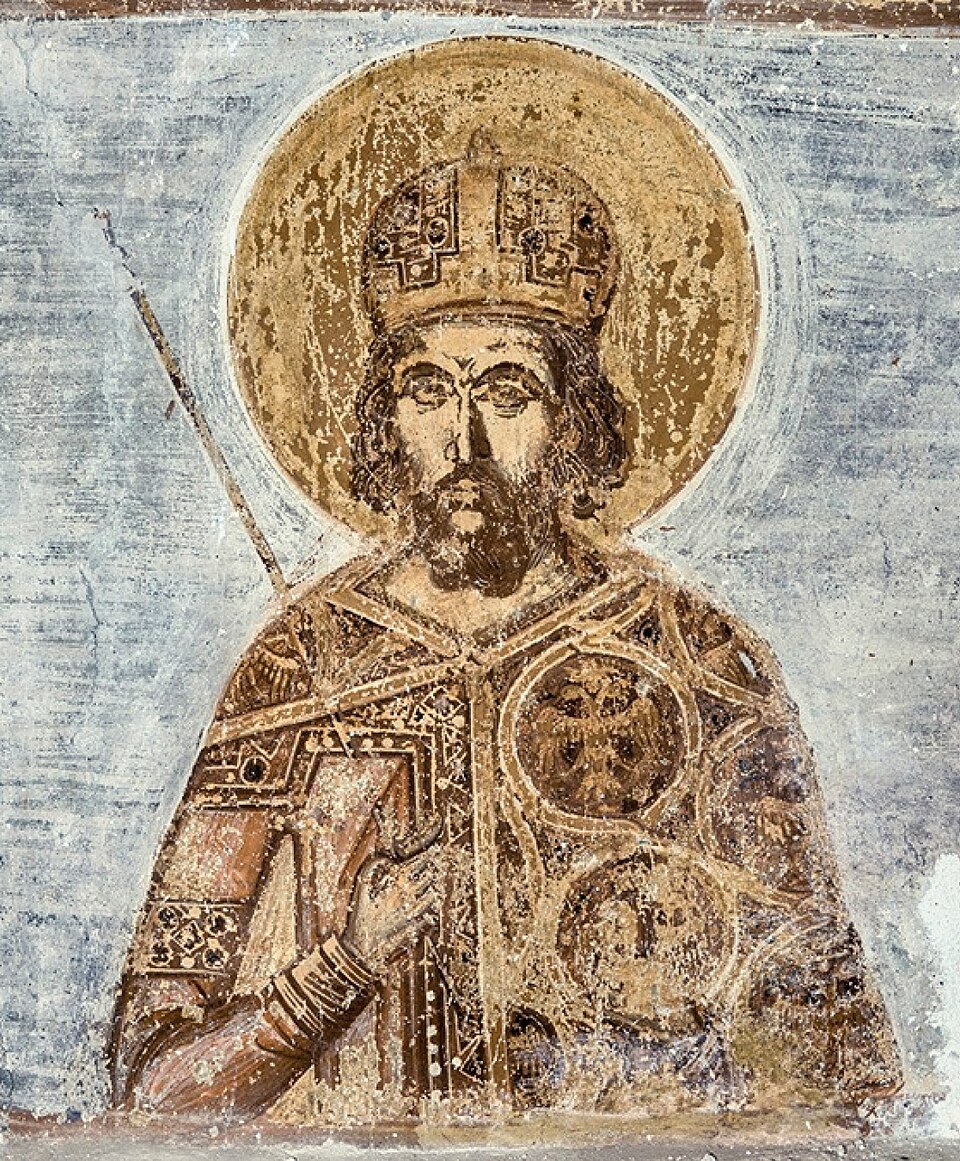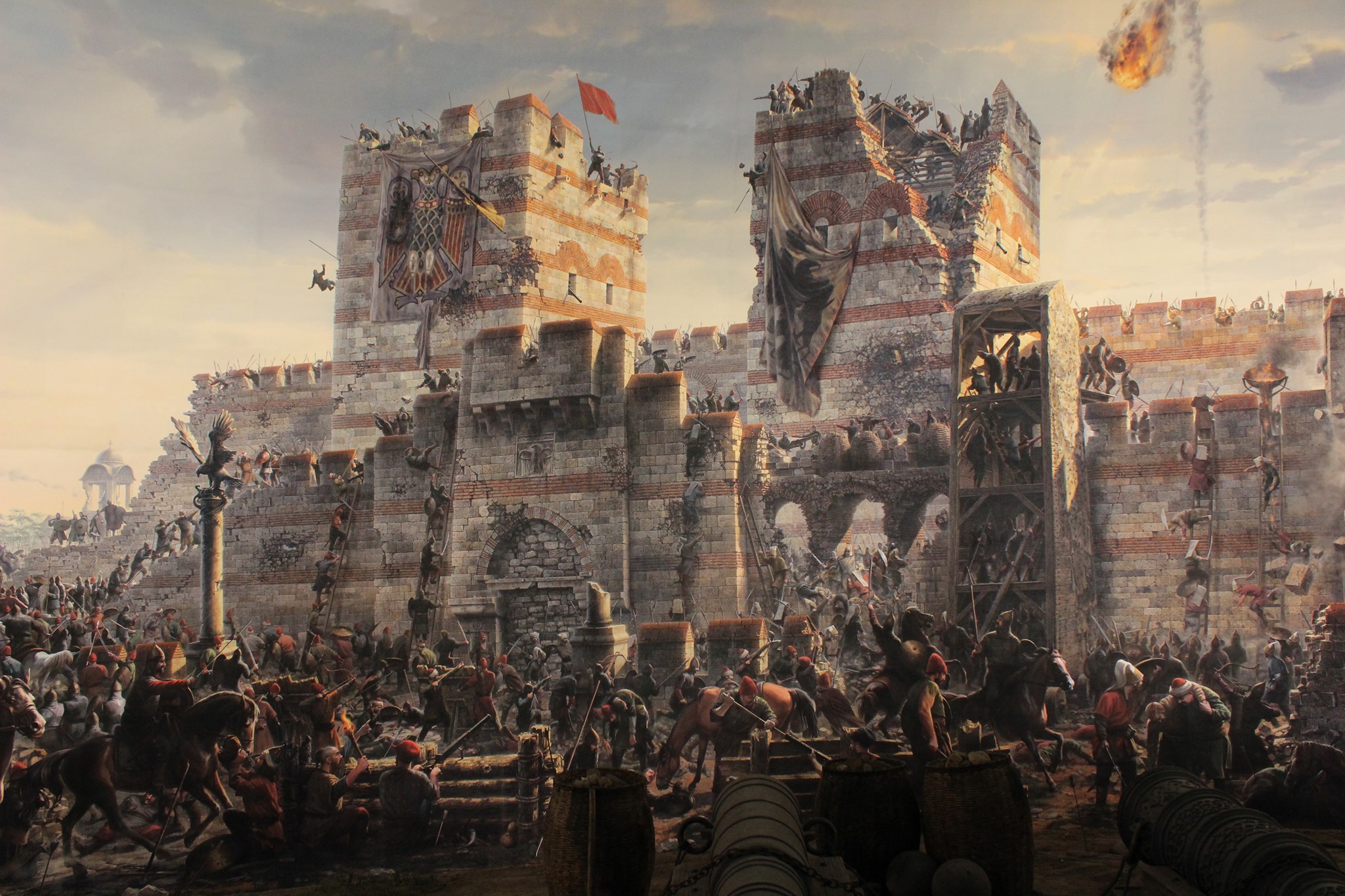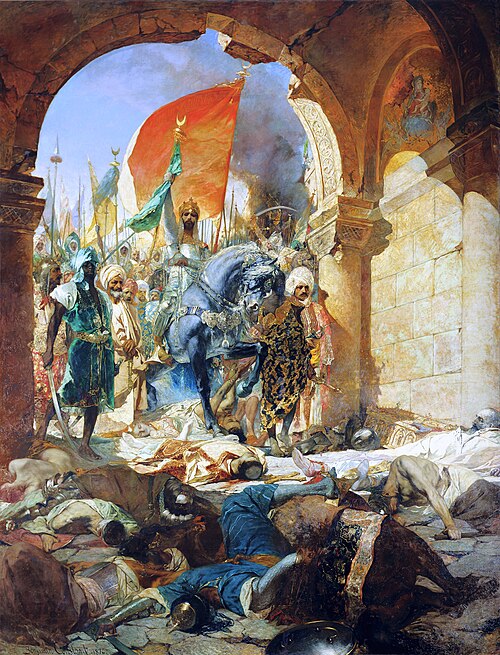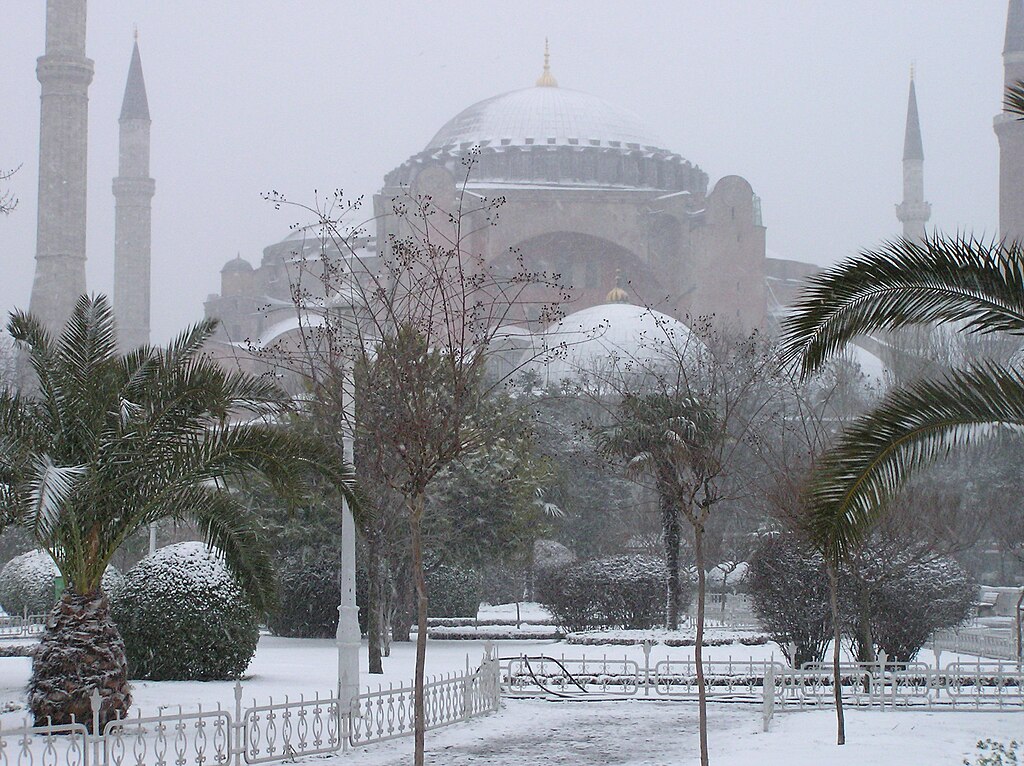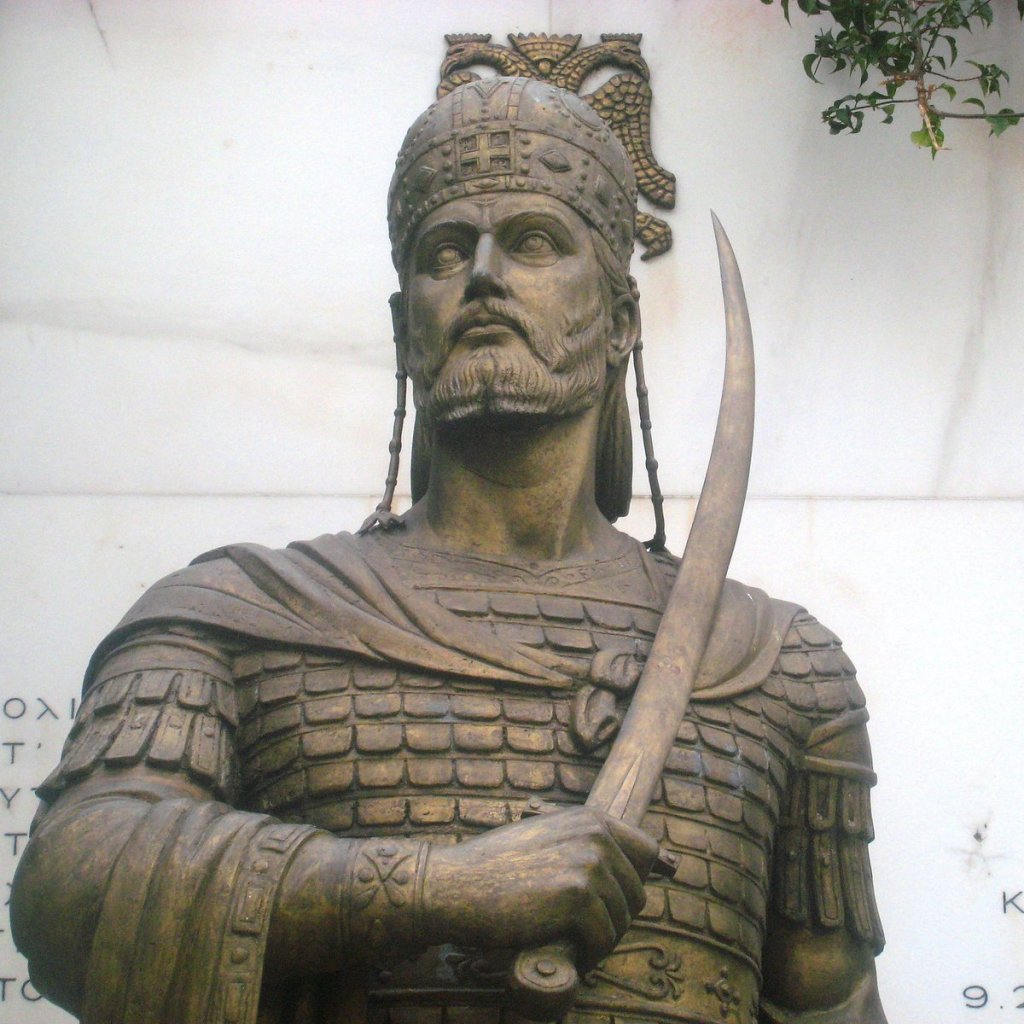
We look at the reaction to the fall of Constantinople in Venice, Rome and Russia. And briefly discuss those who claimed descent from Constantine XI.
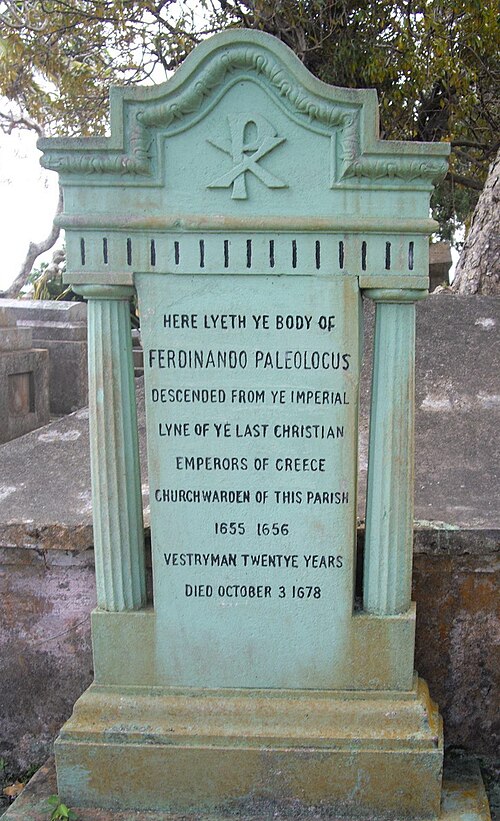
Pic: The gravestone of Fernando Paleologus (c. 1619–1670), also known as Ferdinando or Fernando Palaiologos. He was an Anglo-Greek settler in Barbados who worked as a planter of cotton, sugar, and pineapples, served as a churchwarden at St. John’s Parish Church, and claimed descent from the Palaiologos dynasty
We look at the fate of the Roman people after 1453. Many were enslaved while others searched desperately for loved ones. Those who adapted quickly to Ottoman rule could gain great wealth. While some fled to the West.
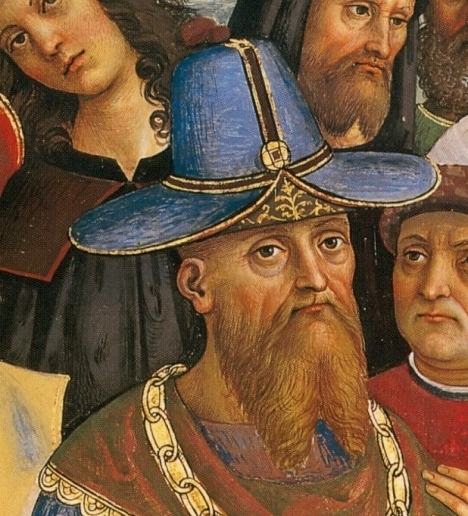
Pic: Thomas Palaiologos from the Pintoricchio fresco of Pius II’s arrival at Ancona, in the Siena Cathedral
Mehmed did not make Constantinople his capital straight away. There were political, practical and psychological arguments against it. We talk about these and how the Sultan overcame them.
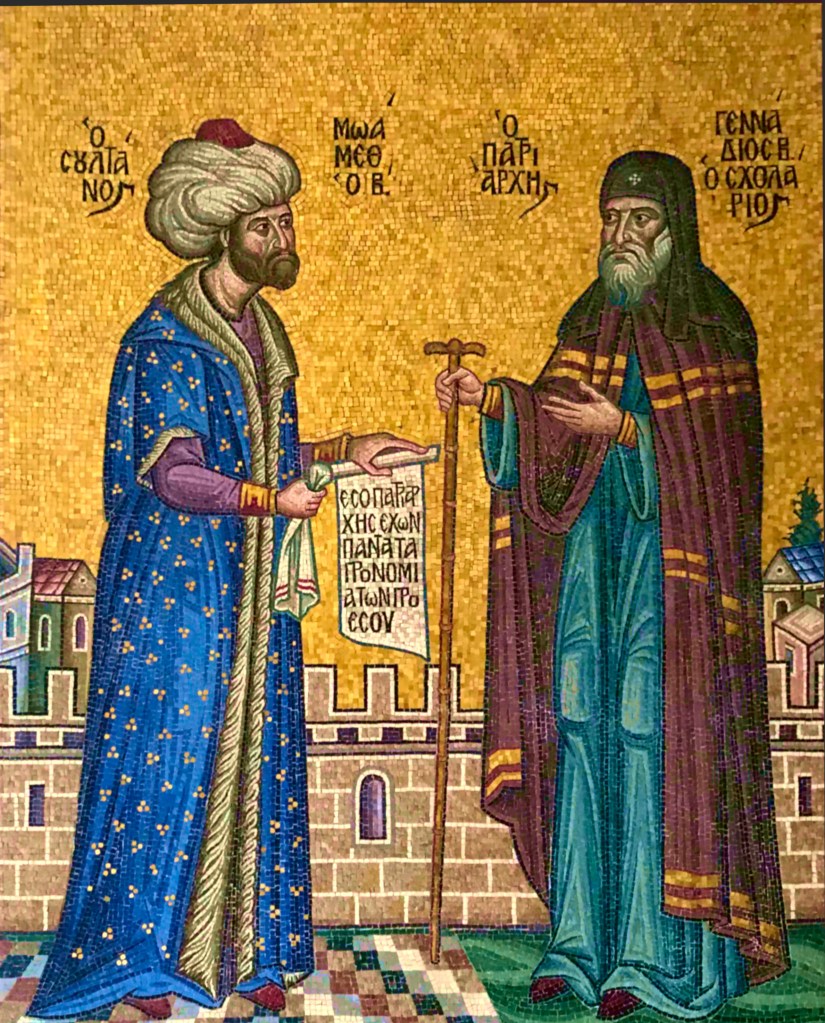
Pic: Mehmed II investing Gennadios II as the new Patriarch. Housed in the Patriarchal buildings in Istanbul.
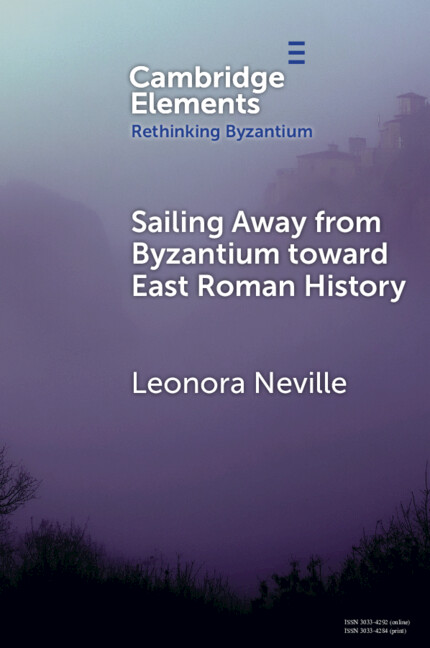
Professor Leonora Neville joins us to make the case for getting rid of the term Byzantium for good. She wants to replace it with a different term and a different understanding of Roman history.
Professor Neville is the John W and Jeanne M Rowe Chair of Byzantine History at the University of Wisconsin-Madison. She specialises in the 9-12th centuries of the Empire’s history. And her research has focussed on gender, civic religion, and religious aspects of political culture as well as historical memory and historiography.
She has written several excellent books which have been vital to this podcast. Her guide to Byzantine historians is essential reading for students. Her book on Byzantine gender helped direct my episodes on ‘Women in the Roman world’ and her book on provincial authority was extremely helpful in understanding Kekaumenos. She is also a Senior fellow at Dumbarton Oaks and an editor of several book series. Find out more at the University of Madison-Wisconsin website.
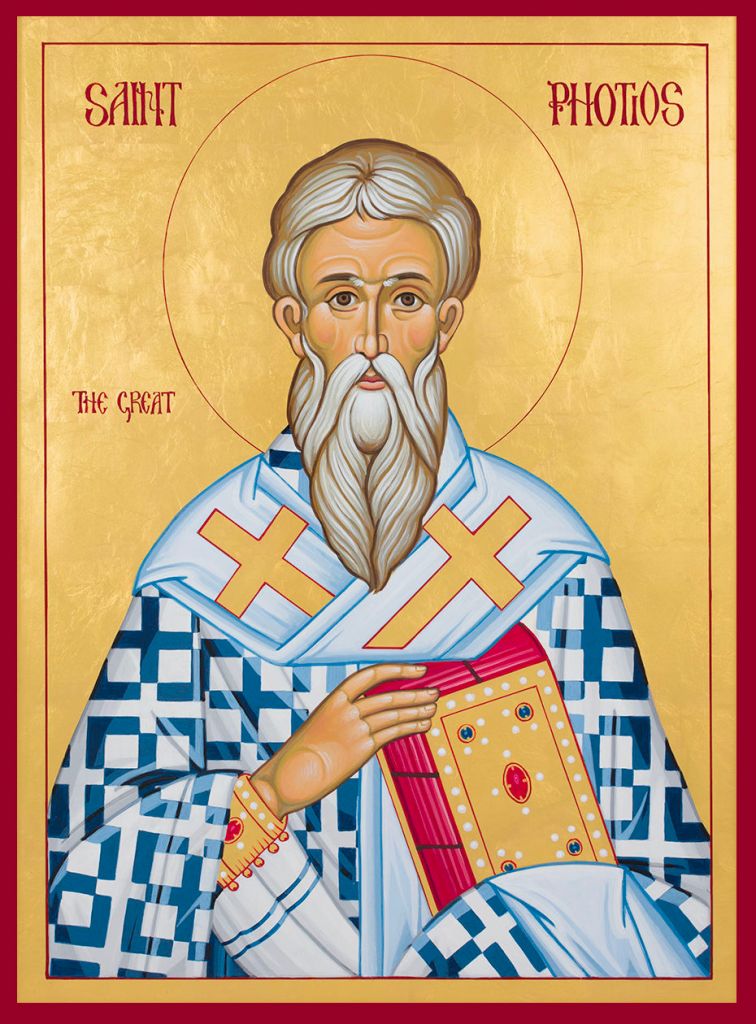
As we look back at Byzantium I turned once more to Professor Anthony Kaldellis. I asked him to present a list of ten influential East Romans who were not featured heavily in the political narrative.