While his armies were fighting in the Balkans Manuel’s diplomats and fleets were busy elsewhere. Komnenos poured money into Italy to try and gain influence there. He considered alliances with the Germans, the Pope and the Normans but ultimately lost them all. He made war on Venice and tried to capture an Egyptian port.
Pic: A golden bust of Frederick I, given to his godfather Count Otto of Cappenberg in 1171. It was used as a reliquary in Cappenberg Abbey and is said in the deed of the gift to have been made “in the likeness of the emperor”.
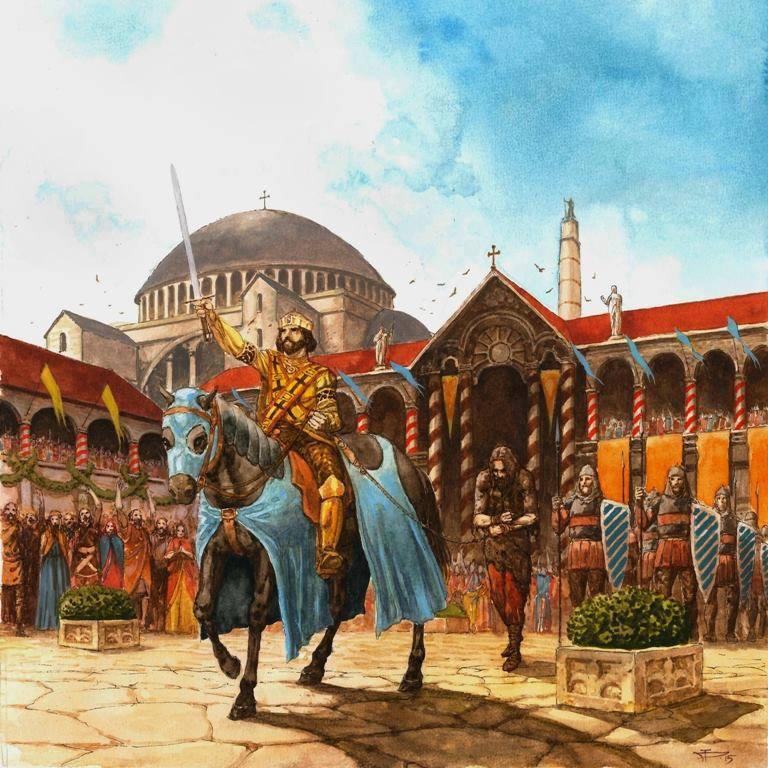
Manuel leads Stefan Nemanja during his triumph in 1172
Manuel spends the 1160s at war with Hungary. During these campaigns the Emperor adopts the Hungarian King’s brother making him his heir. This enables the Romans to seize Sirmium and parts of Dalmatia. The Hungarian elites won’t stand for it and try to throw the Romans out.
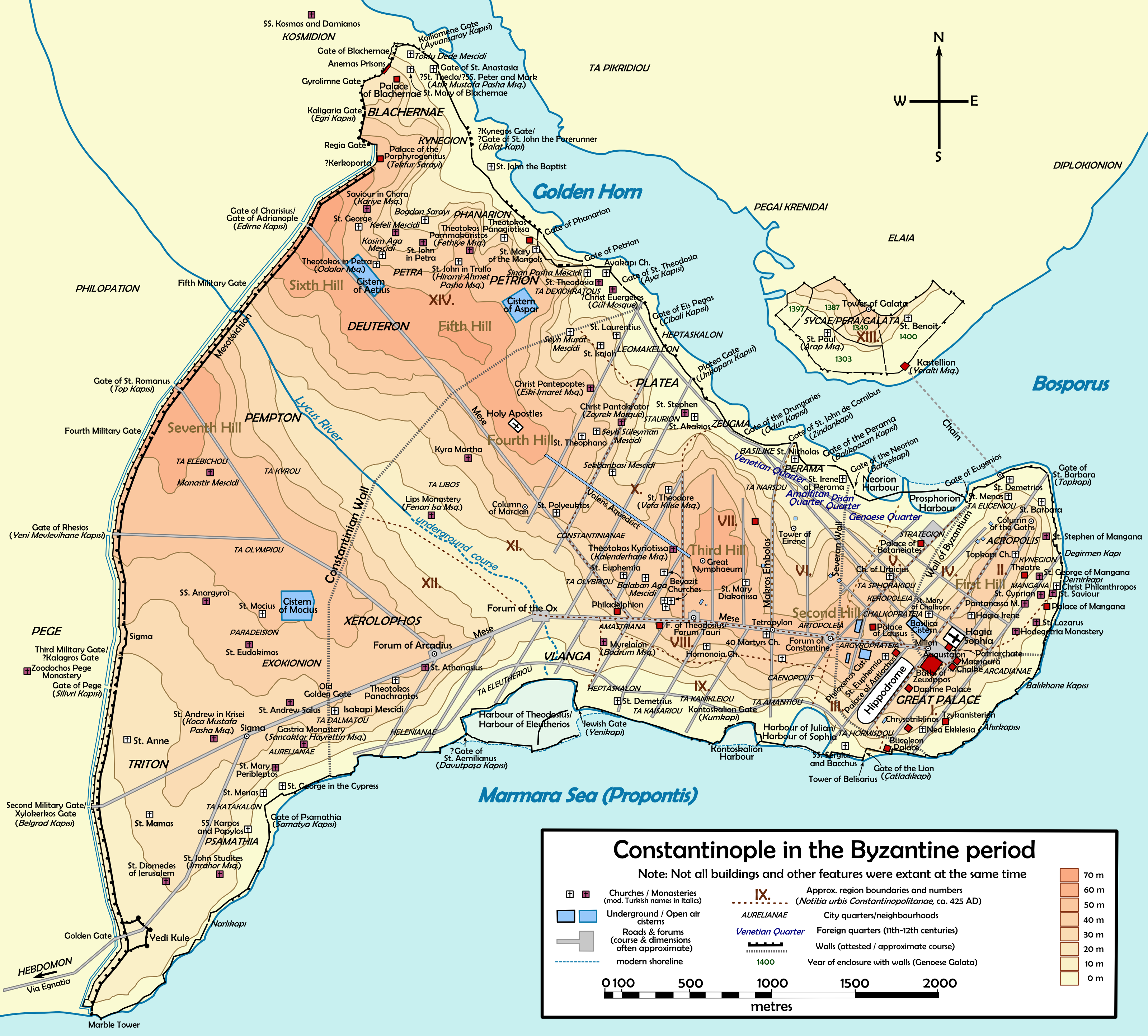
Constantinople in the Byzantine era (CPlakidas on Wikipedia)
We look around Constantinople in Manuel’s day. We discuss his use of the two urban palaces and the growth of the Italian population along the Golden Horn.
When Alexios Komnenos came to power his family decided to marry their way out of the civil wars which threatened the state. By Manuel’s day this meant that a new aristocracy had grown up who dominated the organs of the Byzantine state.
We discuss this development and how Manuel managed his family. As well as those who resented this innovation.
Period: 1143-61
Pic: Manuel Komnenos (Manuscript miniature, Vatican Library)
Today we talk to historian Katherine Pangonis about her book ‘Queens of Jerusalem.’ Not only do we talk about the fascinating lives of the women of Outremer but we also pick up Andronikos’ story as he manages to scandalise all of Christendom.
We pause the narrative briefly to learn more about Manuel’s world. Today we talk about the Emperor’s personality and relatives. Including his cousin, friend and rival Andronikos.
Period: 1143-61
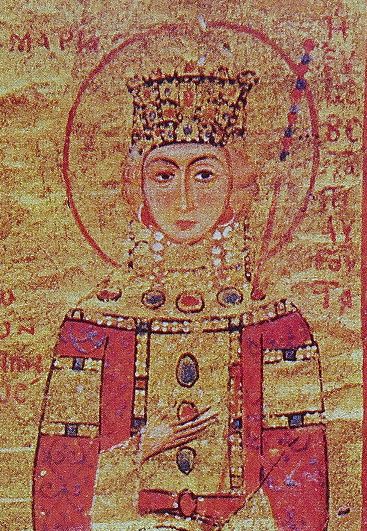
Pic: Maria of Antioch, Manuel’s second wife (Manuscript miniature, Vatican Library)
With Italy and the Balkans at peace Manuel turns his attention to Anatolia. He marches to Antioch to punish those who’d wronged him. He then campaigns against the Turks with surprisingly positive results.
Manuel’s Italian campaign begins brightly but ends in failure. Meanwhile his cousin Andronikos tries to kill him and more bad news arrives from Antioch.
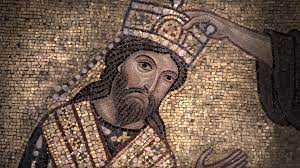
Roger II of Sicily from the Church of Santa Maria dell’Ammiraglio in Palermo
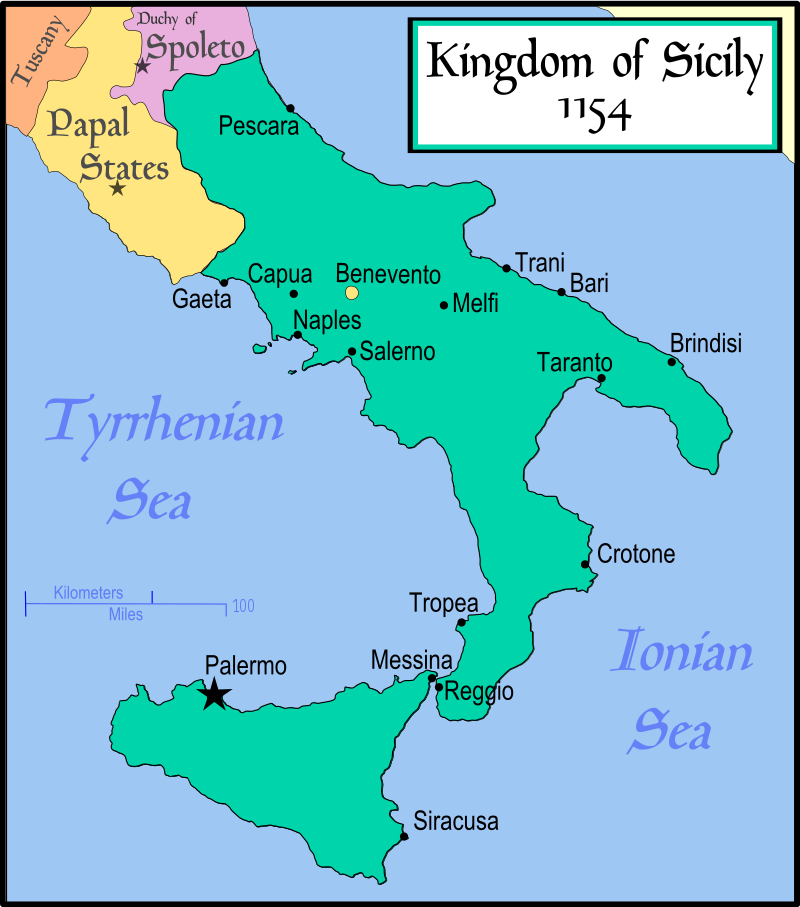
The Normans raid the cities of Greece during the passage of the Second Crusade. Manuel sees this as such a worrying development that he makes the decision to prioritise the recovery of Apulia over Antioch. This sets off a series of conflicts in the Balkans and a series of missed opportunities in Syria.





 The History of Byzantium